The Zen Garden
This is a text that was written in chunks, reflecting different states of mind.
Part 1 - A calm mind
The thought came into my head, like the usual flash of light, in the midst of all the other thoughts. It was definitely triggered by the Kung Fu Panda song by Hans Zimmer and La Lang, which I recommend listening to. And of course I must challenge this “definitely”, because it was a lot more that led to this thought than I can ever possibly understand…
The Chinese flute combined with the gentle piano took my head to a special place, totally unencumbered, as I have never seen the film. In a moment, I was transported to what I’d call the Zen Garden. I struggle to imagine it now, but there was a sense of overwhelming presence about the place. The garden had flowers that I cannot name, raked Japanese-style gravel and stone, and some trees that I cannot name either. And as my vocabulary of botanics gets exhausted by it’s absolute absence, I must write some lines about this moment.
After all, what the place looks like is irrelevant; it matters only what it represents. It represents a feeling in a particular moment. A slice of space-time, so thin and so instant that it is gone the moment you notice it. Well, it is renewing as long as you dwell in it. And there is only so much time to notice it, and in that noticing, noticing that there is no thought. It may seem like a strange concept, but the Zen Garden is in between the mind and what is, almost like a portal. That place is everything, and yet it is nothing, but it is full of beauty, wonder, and calm. These are the words I find to describe the ineffable. All attempts are futile, yet useful, like the description of Borges’ Aleph, the sphere that contains all space-time, the universe, and infinity.
“Arribo, ahora, al inefable centro de mi relato; empieza, aquí, mi desesperación de escritor. Todo lenguaje es un alfabeto de símbolos cuyo ejercicio presupone un pasado que los interlocutores comparten ¿cómo transmitir a los otros el infinito Aleph, que mi temerosa memoria apenas abarca?”
— El Aleph, Jose Luis Borges
For those that are into anime, Kimetsu no Yaiba (Demon Slayer) offers a couple of cool metaphors to represent the feeling in this space. The first is that of Tanjiro’s kokoro (心). I deliberately use this Japanese word as it encapsulates the ideas of heart/body/mind/spirit in one concept without being any of those things specifically. I think that is quite beautiful, but I digress… When a vassal of the demons tries to kill Tanjiro by puncturing his kokoro, he is faced with the immense beauty, generosity and purity of the place and is unable to fulfil his mission.
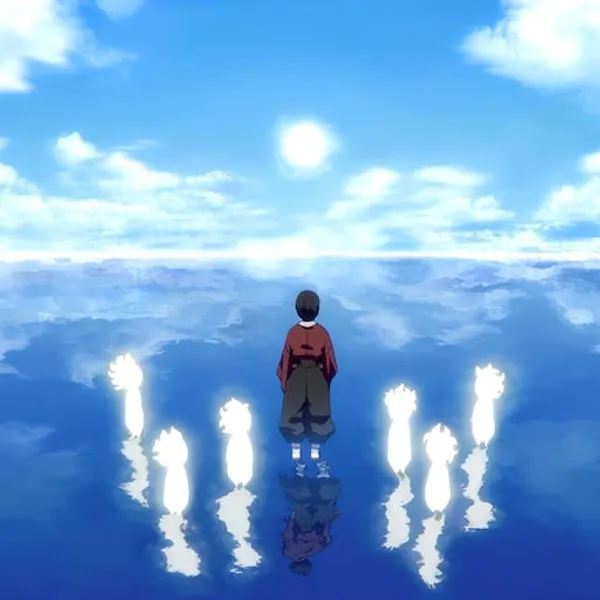
The other metaphor is Giyu Tomioka’s 11th form of water breathing: “Dead calm”. It is described as follows:
“The user ceases all body movements and enters a state of complete tranquility, deflecting, blocking, and cutting any incoming attacks with imperceptible speed with their blade.”
— Kimestu no Yaiba Fandom Wiki
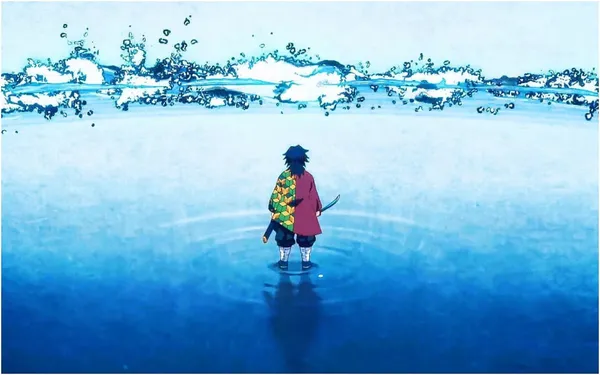
Both these images represent what I am trying to convey but remain mere representations. As for the Zen Garden, I just know it is there, yet it is not, and since this writing is just a figment of my memory, I guess we will never know.
Part 2 - A scattered mind
I continue this text at a point where my mind feels scattered from overwhelming fatigue on top of the stresses of daily life. They will pass eventually, but for now there is a series of physiological sensations that occupy my body and brain. There is fear, there is insecurity, there is anxiety, and naturally, there is endless labelling of these things.
The Ego pulls strongly when energy is low and grows when brain power is reduced. It makes itself big, caring about everything everyone says at a personal level. Every gesture is a potential offense or problem… Insecurity breeds as a result, and neuroticism runs rampant. I’m sure this resonates with others out there; it feels to me like a pretty universal human experience.
Ultimately, these feelings, just like the Zen Garden, are a product of my mind. Just like the garden, they cannot be accurately pinpointed, and in a more radical sense, the “I” that is the victim of all this cannot either. You may ask, Why does any of this matter after all? And you are right to ask the question. All I have to say is that this thought process is a meditation in itself and immediately grounds me and calms my thoughts.
My writing is interrupted as I change stations, and I leave it for another time with a glimpse of the garden in one corner of my eye and my demons in the other.
Post writing
Since I first wrote this, I have watched the first Kung Fu Panda film and it was brilliant. I’ll leave you with a great quote from Master Oogway that felt relevant to this entire narrative:
“You are too concerned with what was and what will be. There’s a saying: Yesterday is history, tomorrow is a mystery, but today is a gift. That is why it is called the present.”